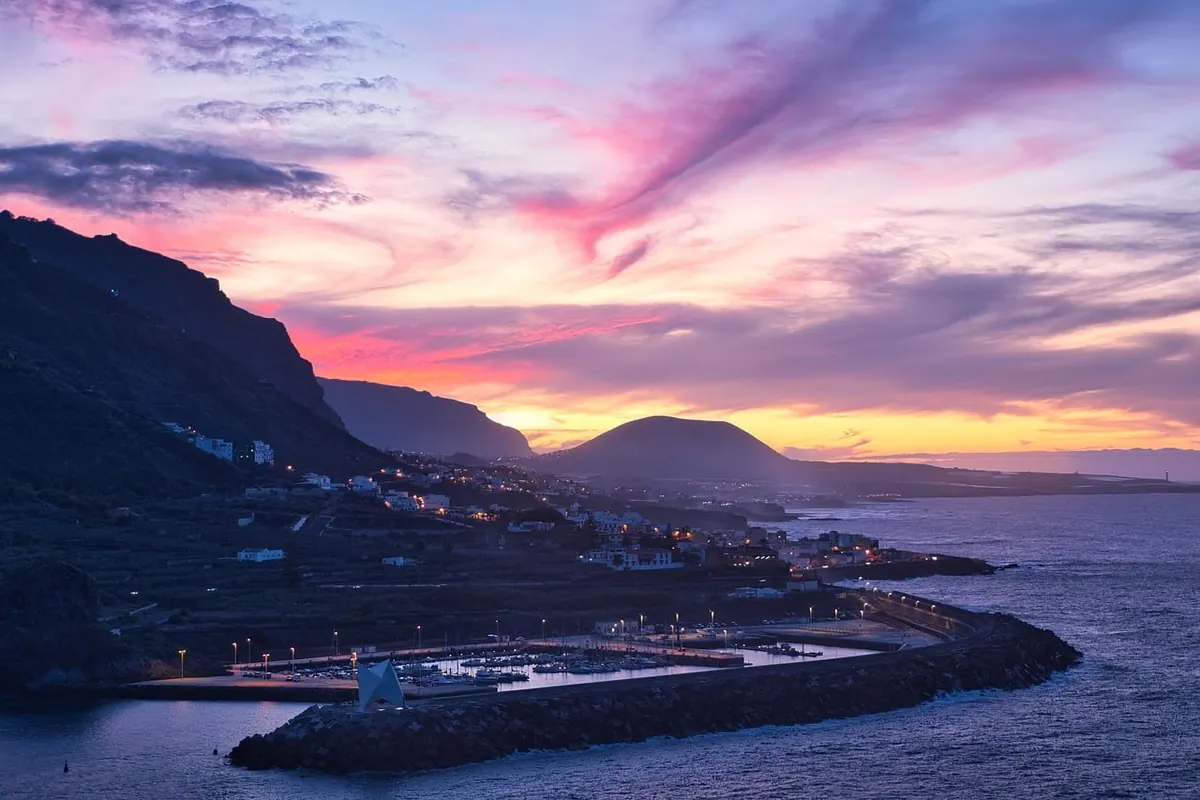
Twenty-five minutes before sunset, the bay changes colour twice. First the water flattens into silver, then the hills behind it turn a soft brown-pink, and for maybe ten minutes the whole coast looks lit from the inside. Guests who stay a week start planning dinner around it. Guests who stay one night often miss it entirely, because they were still parking, or showering, or finishing a phone call.
The bay is generous about this. You do not need a famous viewpoint, a ticket or a reservation. You need a spot facing roughly the right way and a little patience with the clock. What follows are the places we point guests toward most often, in the order we would choose them, plus a simple way to time the evening so you are never the one arriving as the last colour drains out of the sky.
Face the right way first
The most common mistake is finding a viewpoint in July and returning to it in October. The sun does not set in the same place all year. In midsummer it drops well round to the north-west, skimming the far side of the bay and throwing light back across the water toward you. By late autumn it has swung back to the south-west, and the same bench that was perfect in June now faces a shadowed hillside.
Before you commit to a walk, do two things. Check the sunset time for the day, and check the direction on a compass or a sun-position app while you are standing on the terrace at midday, when you can see where the sun actually crosses the sky. If you would rather not bother with apps, ask someone local which way the light comes in that week. Fishermen and dog-walkers are reliable on this and usually pleased to be asked.
The headland path
If you only do one, do this. The path leaves the far end of the beach, climbs through scrub for about twenty minutes and then opens onto a low shelf of rock with a clear view back across the whole curve of the bay. You get the coast in one piece from up there: the harbour, the beach, the pale strip of road, the roofs behind it.
Wear shoes with grip rather than sandals. The last bend is narrow and the stone is polished by years of feet, and it stays slippery for a while after rain. Bring a layer too, even on a hot day. The headland catches the breeze that the beach below is sheltered from, and the temperature drops noticeably the moment the sun goes behind the water.
There is a low wall at the top. Sit on the landward side of it, not on top, especially if there are children with you.
A quieter version
If the main shelf is busy, follow the path another five minutes north. There is a second, smaller ledge with no wall and no bench, and most people stop at the first viewpoint without realising it is there.
The harbour wall and the old jetty
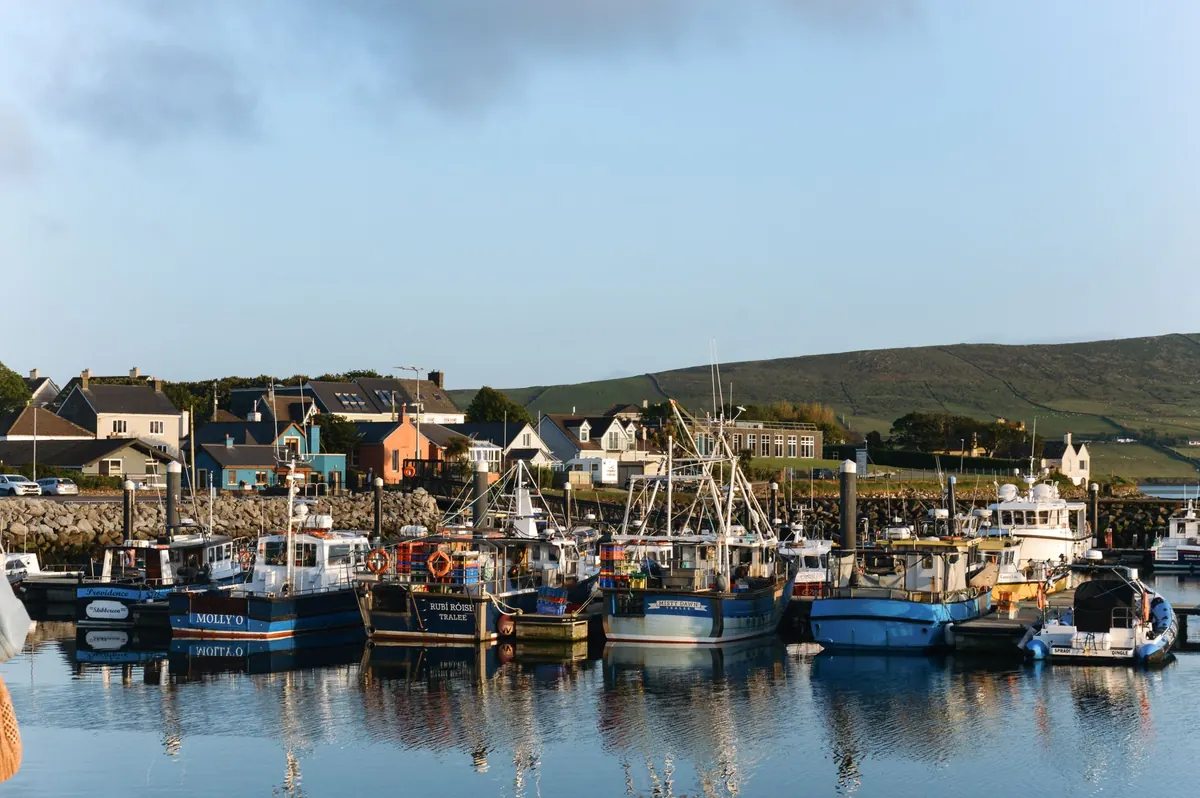
This is the low, close, watery option, and it is the one to choose when you want the sun reflected in a long straight line across the bay. Walk out along the harbour wall, find a spot near the end, and sit facing the open water. The light here arrives in pieces: first on the tops of the moored boats, then across the wet stone, then in one bright path on the sea that lasts until the sun is almost gone.
Two cautions. The stone near the waterline grows a film of algae, so keep away from the very edge unless you are sure of your footing and the sea is calm. And on summer evenings the wall fills up early, with locals as much as visitors, so aim to be there forty-five minutes before sunset rather than ten. Out of season you may have the whole mole to yourself, which is a fine thing in November.
Up the hill: terraces and church steps
Higher ground keeps the sun a few minutes longer than the shoreline, and the village above the bay makes the most of it. The steps beside the church lead to a small terrace with a bench and a view straight down over the rooftops to the water. It is the best place to see the shape of the bay rather than just the colour of it.
Come up here when you want company and a bit of noise: bells, swallows, someone's radio, the clatter of a kitchen. It is also the most forgiving viewpoint if you are late, since you can usually find a step to sit on when the benches are taken.
From the water
Seeing the sunset from a kayak or a small boat puts you outside the bay looking in, and the coast becomes a silhouette rather than a view. Local operators run short evening paddles in calm weather; going out with one is far easier than organising it yourself.
If you do go under your own power, keep it simple and cautious. Wear a life jacket, tell someone where you are going and when you expect to be back, stay close to shore, and turn around while there is still plenty of light. Offshore breezes pick up in the evening and can make the return trip much harder than the outward one. Do not paddle alone at dusk, and do not stay out to watch the last of the afterglow — the darkness arrives faster on the water than it does on land.
The easy option: pine shade above the beach
Not every sunset needs a walk. The pines at the back of the beach give you a bench, some shade, a view through the trunks and a five-minute stroll home afterwards. Bring something to eat, a bottle of something cold, and insect repellent for the hour after the sun goes down. This is the choice on a windy evening, on a day when your legs are tired, or when you have children who will need carrying back.
How to time the evening
The light you came for happens before the sun touches the water and for a while after it has gone. Build the evening backwards from the sunset time and you will never rush it:
- Two hours before: check the sky. Broken high cloud gives you a far better sunset than a clear blue one; a flat grey overcast rarely delivers, and that is the evening to book dinner early instead.
- Sixty to forty-five minutes before: arrive at your spot. Find your seat, work out where the sun will land, take the photographs you want while the light is still easy.
- Twenty minutes before: stop moving. This is when the colour starts, and it changes quickly.
- At sunset: the obvious moment, and not the best one. Stay put.
- Fifteen to thirty minutes after: the afterglow, often richer than the sunset itself. In summer, usable light lingers well beyond this, which is why a late dinner works so well here.
Keep the walk home in mind while you plan. A path that took twenty minutes in daylight takes longer in the dark, so bring a torch or use the one on your phone, and know roughly which turning leads back to your door.
Before you go
A short list, because most sunset disappointments are practical rather than meteorological.
- A layer for after the sun drops — the temperature falls quickly near the water.
- Shoes with grip if you are taking the headland path.
- A torch for the walk back, and a charged phone.
- Water, and something to sit on if the stone looks damp.
- Insect repellent for evenings near the pines.
- A backup plan: a bar with a westward window is a perfectly good second choice when the cloud refuses to cooperate.
Ask at the house if you would like the evening route marked on a map, or advice on which viewpoint suits the season you are visiting. The bay does the rest.
Photo: Złapane_Chwile / Pixabay